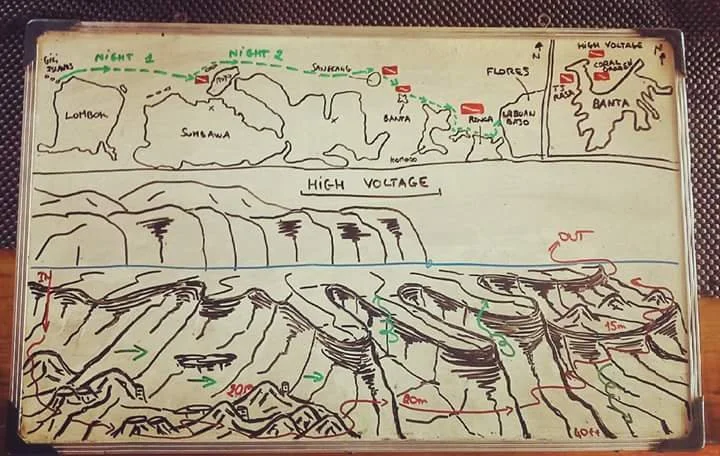
How do dive crews plan dives in Komodo?
Dive crews in Komodo National Park plan each day based on tides, currents, weather, and diver ability. Every dive is adjusted in real time to maximise safety, marine life encounters, and overall experience.
🌊 Why Planning Is Critical in Komodo
❓ Why can’t dive plans stay fixed?
Komodo is not a static dive destination.
Conditions change constantly:
Tides shift throughout the day
Currents vary in strength and direction
Visibility changes
👉 This is why planning is dynamic — not fixed.
👉 It’s also why liveaboards consistently deliver better dives, as explained in Top 10 Reasons to Choose a Komodo Liveaboard.
🌅 Step 1: Early Morning Condition Check
❓ What happens before the first dive?
Before guests even wake up, the crew is already working.
They assess:
Tide charts
Current flow
Weather conditions
Boat position
👉 These decisions determine:
Dive site order
Entry timing
Safety approach
👉 This planning process is directly linked to safe diving in Komodo — explained in How Liveaboard Dive Planning Improves Safety in Komodo.
🧭 Step 2: Choosing the Right Dive Site
❓ How do crews choose dive sites?
Site selection depends on:
Current direction
Diver experience
Marine life opportunities
👉 For example:
Strong incoming current → sharks at pinnacles
Plankton-rich flow → manta activity
Moderate conditions → reef dives
👉 These choices directly influence what you see underwater:
Sharks — see Where to See Sharks in Komodo (Best Dive Sites & Conditions)
Mantas — explained in Manta Rays in Komodo: Best Dive Sites, Conditions & What to Expect
🌊 Step 3: Timing the Dive Correctly
❓ Why does timing matter so much?
A 20–30 minute difference can completely change a dive.
Correct timing means:
Safer conditions
Better visibility
More marine life
👉 This is one of the biggest advantages of liveaboard diving — flexibility.
👉 It’s also what creates those “perfect dives” people talk about.
👥 Step 4: Matching the Dive to the Group
❓ Do crews adjust dives based on guests?
Yes — always.
Crews consider:
Experience level
Comfort in currents
Group dynamics
👉 This is especially important in Komodo, where conditions can vary significantly.
👉 It’s also why small groups perform better — explained in Benefits of Small Group Liveaboard Diving.
🐟 Step 5: Adjusting in Real Time
❓ What happens if conditions change?
Plans are constantly updated.
If:
Current is too strong → change site
Visibility drops → adjust dive plan
Marine life shifts → reposition
👉 This flexibility is what turns a good trip into a great one.
👨✈️ Real Experience: What Guests Don’t See
From real operations:
“Some of the best dives happen because crews delay entry by just 10–15 minutes to hit the right current.”
“Guests often don’t realise how much adjustment happens behind the scenes to make each dive feel effortless.”
👉 This is where experience matters most.
📊 Why This Planning Improves Your Experience
Proper planning leads to:
Safer dives
Better marine life encounters
More consistent conditions
👉 It’s the difference between:
Random dives
vsWell-timed, high-quality dives
🌊 How This Connects to Your Daily Experience
All this planning shapes what your day looks like onboard.
👉 Dive timing
👉 Surface intervals
👉 Site selection
👉 It’s all connected to the daily rhythm — see A Day on a Komodo Liveaboard: What to Expect.
⚠️ Why This Matters More Than You Think
❓ Can poor planning ruin a trip?
Yes — absolutely.
Without proper planning:
Dives can be unsafe
Marine life encounters drop
Experience becomes inconsistent
👉 This is why experienced crews make such a difference.
🌊 Why Liveaboards Do This Better
A Komodo liveaboard diving trip allows:
Flexible scheduling
Access to multiple sites
Real-time adjustments
👉 This is something land-based diving simply cannot match.
❓ Komodo Dive Planning FAQs
Do crews plan dives every day?
Yes — every day is planned based on changing conditions.
Are dive sites fixed in advance?
No — plans are flexible and adjusted daily.
How do crews know where marine life will be?
Through experience, current patterns, and real-time observation.
Is this why liveaboards are better?
Yes — flexibility and planning are key advantages.
🔥 Final Thoughts: The Invisible Work Behind Every Great Dive
The best dives don’t happen by chance.
They happen because of:
Planning
Experience
Timing
👉 And most of it happens behind the scenes.
👉 Plan Your Komodo Liveaboard Trip (June–September)
If you want:
Well-planned dives
Maximum marine life encounters
A small group experience (max 8 guests)
👉 Komodo trips run June to September and fill quickly — secure your space early.