Why Dive Planning Matters in Komodo
Is diving in Komodo safe?
Yes — but only when it’s planned properly.
Diving in Komodo National Park is not like diving in calm, predictable environments. The region is driven by powerful tidal exchanges, meaning conditions can change dramatically within hours.
👉 This is exactly why liveaboard dive planning is critical.
It’s not just about where you dive — it’s about:
When you enter the water
How you enter
How the dive is structured
What the current is doing at that exact moment
Without this level of planning, dives can quickly become uncomfortable or unsafe.
⚡ Understanding Komodo’s Currents (And Why Timing Is Everything)
Komodo sits between the Indian Ocean and the Flores Sea, creating one of the most dynamic marine environments in the world.
This results in:
Strong tidal currents
Direction changes
Possible Down currents on pinnacles
Localised site conditions
Sites like:
Castle Rock
Crystal Rock
The Cauldron
Karang Makassar (Manta Point)
…can vary massively depending on timing.
👉 The same dive site can be:
Calm and full of life
Or fast-moving and challenging
Timing isn’t a detail in Komodo — it’s everything.
🧭 How Liveaboards Plan Safer Dives
✔ Flexible Itineraries = Safer Diving
Unlike land-based diving, liveaboards don’t follow fixed schedules.
They adjust daily based on:
Tide tables
Current strength
Wind conditions
Real-time observations
This allows:
✅ Diving at slack or manageable current
✅ Avoiding dangerous conditions
✅ Selecting sheltered sites when needed
✅ Maximising safety without sacrificing experience
👉 This flexibility is the biggest safety advantage in Komodo.
✔ Dive Planning Based on Tides (Not the Clock)
A well-run liveaboard doesn’t plan dives at “9am and 2pm.”
Instead, dives are planned around:
Incoming vs outgoing tide
Peak vs slack current
Site-specific flow patterns
👉 This ensures divers enter the water when conditions are optimal — not just convenient.
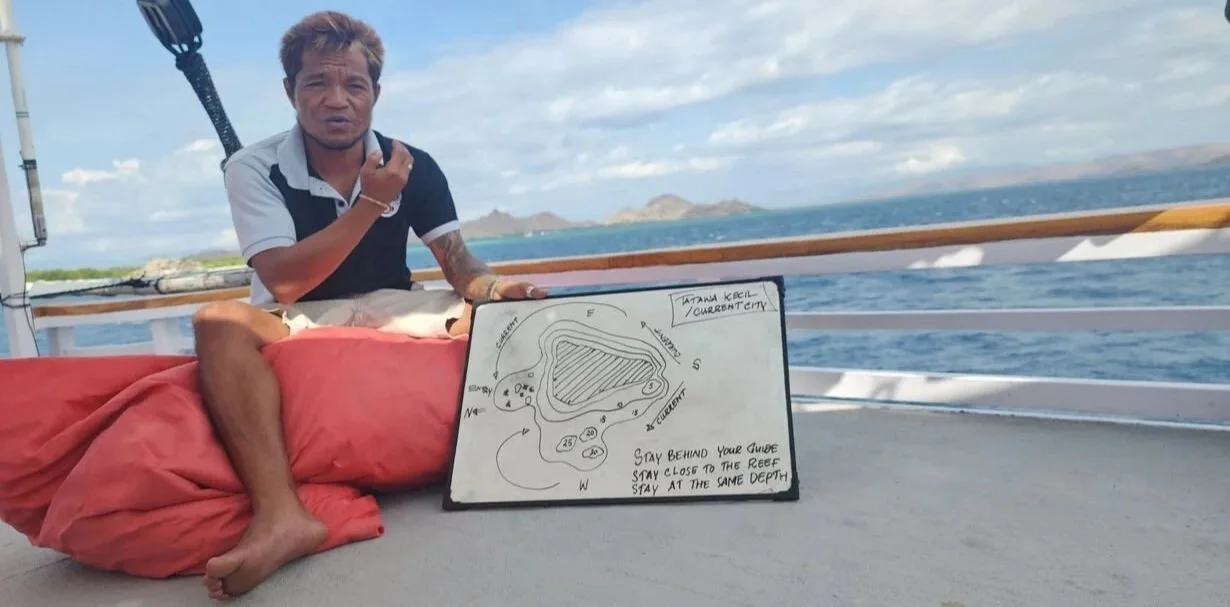
👨✈️ Dive Briefings: Where Safety Starts
Every dive begins with a structured, detailed briefing.
A proper Komodo briefing includes:
Entry type (negative entry, backroll, current drop)
Expected current direction and strength
Dive route and reef structure
Hook-in points for strong current areas
Exit strategy and pickup plan
👉 This removes uncertainty before the dive even begins.
And in Komodo, clarity = safety.
🌊 Drift Diving vs Fighting the Ocean
Komodo is famous for drift diving — but only when it’s done correctly.
A properly planned drift dive:
Uses current direction to guide the dive
Avoids unnecessary effort
Keeps divers in control
Ends in a safe, predictable exit zone
Instead of fighting the current:
👉 You move with it.
This reduces:
Air consumption
Stress
Risk of separation
🚤 Surface Support: The Hidden Safety System
One of the biggest safety advantages of a liveaboard is what happens above the water.
Liveaboards provide:
Constant surface watch
Real-time diver tracking
Immediate pickup after surfacing
This is essential because:
Currents can carry divers far from entry point
Surface conditions can change quickly
Fast pickup reduces exposure and fatigue
👉 You are never “on your own” in the water.
🧠 Local Knowledge = Risk Reduction
No chart replaces experience.
Local dive guides understand:
Micro-current behaviour
Site-specific hazards
Seasonal patterns
Marine life movement
For example:
Knowing when mantas arrive at cleaning stations
Avoiding downcurrents at specific sites
Reading subtle changes in water movement
👉 This knowledge significantly improves safety margins.
🐟 Better Planning = Better Diving
Safety planning doesn’t just reduce risk — it improves the dive.
When dives are timed correctly, you get:
More marine life
Better visibility
Longer, more relaxed dives
Less physical effort
This is when Komodo delivers its best:
Manta rays gliding effortlessly
Sharks patrolling current lines
Huge schools of fish moving with the tide
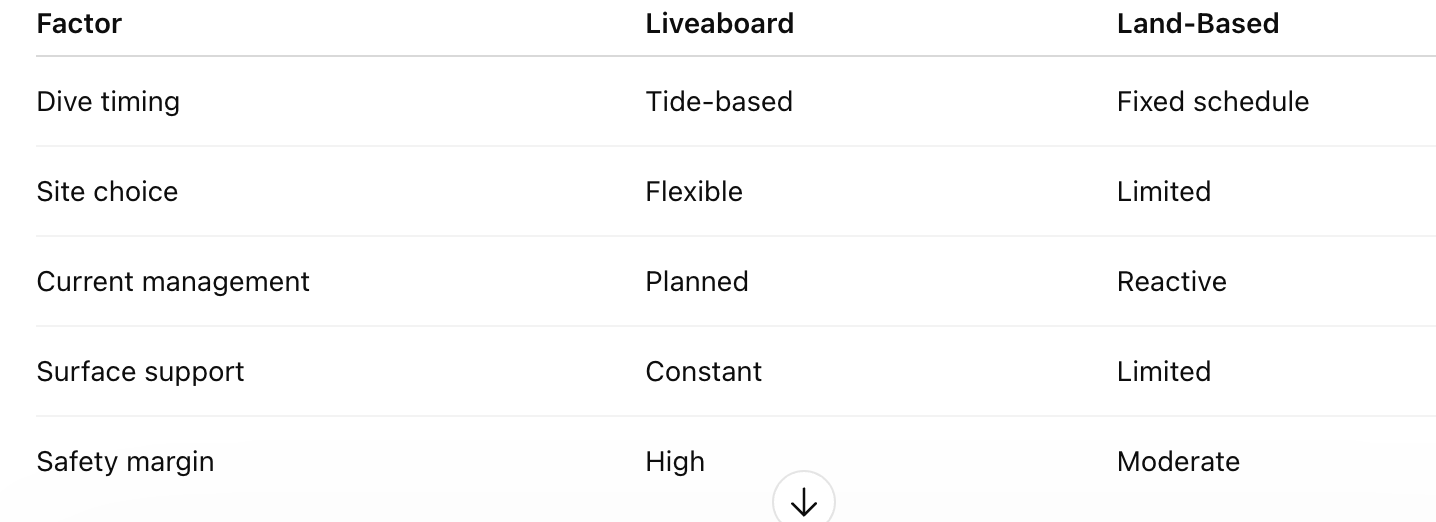
📊 Liveaboard vs Land-Based Diving (Safety Comparison)
📍 Practical Safety Tips for Komodo Diving
✔ Be comfortable with negative entries
✔ Always follow the dive briefing
✔ Carry an SMB
✔ Stay close to your guide
✔ Maintain good buoyancy
🔥 Final Thoughts: Planning Is the Difference
Diving in Komodo National Park is one of the most rewarding experiences in the world — but it demands respect.
👉 The key difference between a challenging dive and an unforgettable one is:
Planning. Timing. Execution.
And this is exactly where liveaboards excel.
👉 Start Planning Your Komodo Liveaboard Adventure (2026–2027)
If you want:
Safe, well-timed dives
Incredible marine life encounters
Small groups and personalised diving
👉 Explore your options and secure your trip early.