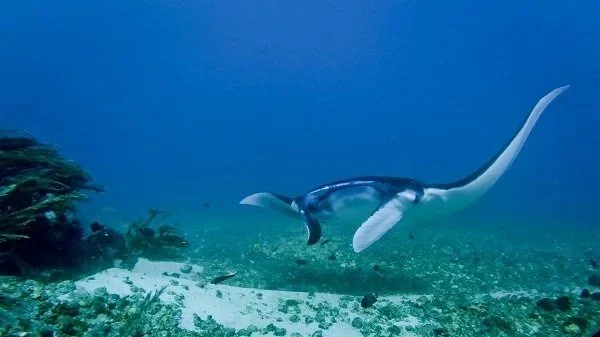
🧠 Where can you see manta rays in Komodo?
Manta rays are most commonly seen in Komodo National Park at sites like Karang Makassar (Manta Point) and Manta Alley. These sites work best when currents are flowing steadily, bringing plankton and creating ideal feeding conditions.
🌊 Why Komodo Is One of the Best Places in the World to See Manta Rays
❓ Why are manta rays so common in Komodo?
Manta rays in Komodo are strongly linked to current flow and food availability.
Currents bring:
Plankton-rich water
Cleaning station activity
Predictable feeding patterns
This makes Komodo diving conditions ideal for regular manta encounters.
👉 These same current systems also drive other marine life encounters — including sharks, as explained in Where to See Sharks in Komodo (Best Dive Sites & Conditions).
👉 Understanding how currents shape marine life is essential for both safety and sightings — covered in How Liveaboard Dive Planning Improves Safety in Komodo.
📍 Best Places to See Manta Rays in Komodo
❓ What are the best manta ray dive sites in Komodo?
🐠 Karang Makassar (Manta Point)
This is the most famous manta site in Komodo.
What makes it special:
Shallow reef plateau
Cleaning stations
Regular manta traffic
Mantas are often seen:
Gliding over sand patches
Circling cleaning stations
Feeding in current lines
👉 This site is highly dependent on current direction and timing — something that is only properly managed on flexible trips, as explained in Benefits of Small Group Liveaboard Diving.
🐠 Manta Alley
Located in the south of Komodo, Manta Alley offers:
Larger manta gatherings
Stronger currents
More dramatic conditions
This is often where you see:
Multiple mantas at once
Feeding behaviour
Close passes
👉 Conditions here can be more dynamic, similar to high-energy shark sites like The Cauldron — see Where to See Sharks in Komodo for comparison.
🧭 When Is the Best Time to See Manta Rays?
❓ Are manta rays seasonal in Komodo?
Manta rays can be seen year-round in Komodo, but conditions influence how often and how many you see.
Key factors:
Current strength
Plankton availability
Tide timing
👉 Planning your trip around the right conditions makes a huge difference — explained in Best Time to Dive Komodo (Seasons, Conditions & Marine Life).
👨✈️ Real Experience: What Manta Encounters Feel Like
From real dives:
“At Karang Makassar, mantas often appear suddenly out of the blue, gliding effortlessly across the reef before circling back again.”
“Some of the best encounters happen when divers remain still and let the mantas approach naturally.”
👉 These are not fast encounters — they are calm, controlled, and often last several minutes.
📊 What Makes a Great Manta Dive?
The best manta dives happen when:
Currents are steady (not too strong, not too weak)
Visibility is moderate to good
Divers are positioned correctly
👉 This is why proper dive planning is critical — especially in sites influenced by changing currents, as explained in How Liveaboard Dive Planning Improves Safety in Komodo.
⚠️ How to Dive Safely with Manta Rays
❓ Is diving with manta rays safe?
Yes — manta ray diving in Komodo is safe when done correctly.
Key guidelines:
Do not chase mantas
Stay low and calm
Allow mantas to approach
👉 These same principles apply across Komodo diving — especially in current-driven environments, where positioning matters.
🌊 Why Liveaboards Offer the Best Manta Experiences
Manta encounters improve significantly when dives are timed correctly.
A Komodo liveaboard diving trip allows:
Flexible dive timing
Access to multiple manta sites
Real-time adjustments based on conditions
👉 This is why most divers choose this approach — explained in Top 10 Reasons to Choose a Komodo Liveaboard.
👉 It also connects directly to the daily dive rhythm onboard — see Komodo Liveaboard Daily Life.
❓ Komodo Manta Diving FAQs
How many manta rays can you see in Komodo?
On a good dive, it’s common to see multiple mantas — sometimes more than 5–10 in one dive.
Are manta rays aggressive?
No — manta rays are completely harmless and non-aggressive.
Do mantas stay in one place?
No — they move between feeding areas and cleaning stations depending on conditions.
What is the best site for manta rays in Komodo?
Karang Makassar (Manta Point) is the most reliable site for consistent sightings.
🔥 Final Thoughts: Mantas Move With the Ocean
Manta rays in Komodo are not random.
They follow:
Plankton
Currents
Cleaning stations
Understanding this transforms your experience from:
👉 hoping to see mantas
to
👉 knowing where they move towards
👉 Plan Your Komodo Manta Diving Trip (2026–2027-2028)
If you want:
Reliable manta encounters
Well-timed dives
A small group experience (max 8 guests)
👉 Komodo liveaboard trips run June–September and fill quickly — secure your space early.