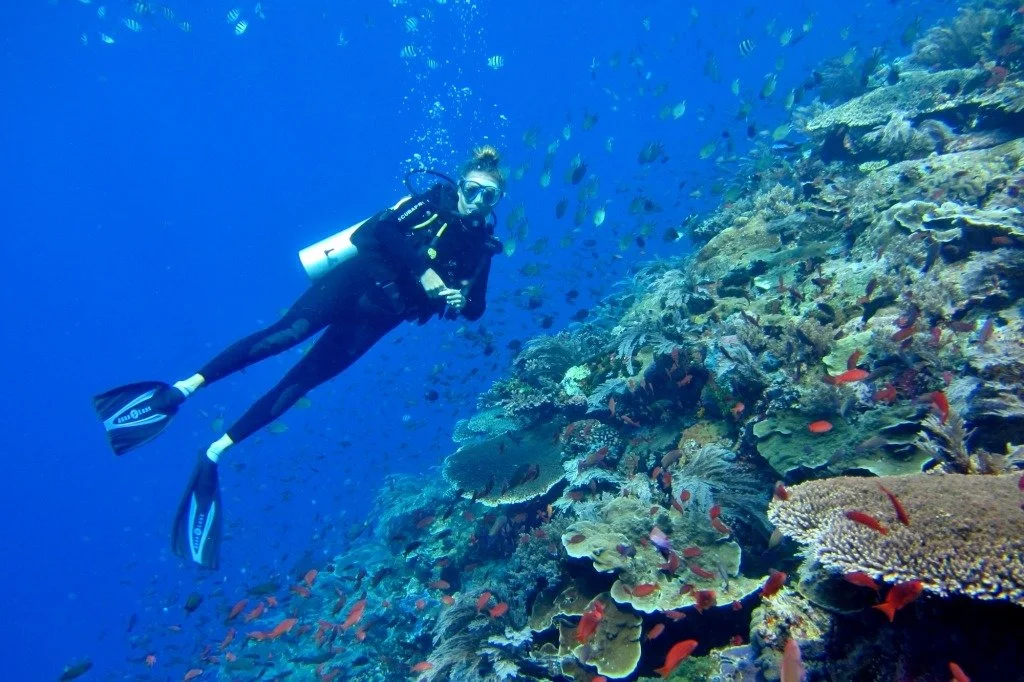
Why are coral reefs in Komodo so healthy?
Coral reefs in Komodo National Park are exceptionally healthy due to strong ocean currents, nutrient-rich water, and strict marine protection. These conditions create one of the most biodiverse reef systems in the world.
🌊 The Secret Behind Komodo’s Reef Health
❓ What makes Komodo’s reefs different?
Komodo’s reefs are not just beautiful — they are highly resilient.
Key factors include:
Constant water movement
High nutrient flow
Low sediment buildup
Strong marine protection
This creates ideal conditions for coral growth and regeneration.
👉 These same current systems also drive marine life encounters — including sharks and mantas, as explained in Where to See Sharks in Komodo (Best Dive Sites & Conditions) and Manta Rays in Komodo: Best Dive Sites, Conditions & What to Expect.
🌊 The Role of Currents in Reef Health
❓ Why do currents improve coral reefs?
Currents are the most important factor in Komodo’s reef ecosystem.
They:
Deliver nutrients to corals
Remove waste and sediment
Prevent algae overgrowth
Support plankton-rich ecosystems
This is why Komodo diving conditions are so unique.
👉 Understanding these conditions is key to both reef health and dive safety — covered in How Liveaboard Dive Planning Improves Safety in Komodo.
🐠 What You’ll See on Komodo’s Reefs
❓ What marine life lives in Komodo’s coral reefs?
Komodo reefs are alive with:
Massive schools of fish
Reef sharks patrolling edges
Manta rays passing overhead
Vibrant hard and soft corals
This is what gives Komodo its reputation as one of the best places in the world for liveaboard diving in Indonesia.
👉 These reef systems are directly connected to larger marine life behaviour — especially schooling fish and predators.
👨✈️ Real Experience: What It Feels Like to Dive Komodo Reefs
From real dives:
“Some reefs in Komodo are so alive that it feels like the entire reef is moving — fish in every direction, all reacting to the current.”
“On certain dives, visibility fills with movement — from tiny reef fish to larger predators circling the reef edges.”
👉 This level of activity is what makes Komodo stand out globally.
📊 Why Komodo Has So Much Marine Life
❓ Why is biodiversity so high in Komodo?
Komodo sits in the heart of the Coral Triangle, the most biodiverse marine region on Earth.
This means:
Thousands of fish species
Extensive coral diversity
Constant ecosystem interaction
👉 This biodiversity is one of the main reasons divers choose Komodo — as explained in Top 10 Reasons to Choose a Komodo Liveaboard.
⚠️ How Divers Can Protect Komodo’s Reefs
❓ Are Komodo reefs fragile?
Yes — although healthy, they are still sensitive to human impact.
Key guidelines:
Maintain good buoyancy
Avoid contact with coral
Follow dive guide instructions
👉 Small group diving helps reduce environmental impact — explained in Benefits of Small Group Liveaboard Diving.
🌊 Why Liveaboards Help Protect Reef Systems
Liveaboards play a key role in sustainable diving.
They allow:
Better site rotation
Reduced overcrowding
More controlled dive groups
👉 This creates a more sustainable experience while also improving dive quality.
👉 It also connects directly to the overall diving experience — see Komodo Liveaboard Daily Life.
❓ Komodo Coral Reef FAQs
Are Komodo reefs better than other places?
Komodo reefs are among the healthiest in the world due to strong currents and marine protection.
What type of coral is found in Komodo?
Both hard and soft corals thrive, creating diverse reef structures.
Can beginners enjoy Komodo reefs?
Yes — many sites are accessible, although some are influenced by currents.
Why are currents important for coral?
They bring nutrients, remove waste, and support marine life ecosystems.
🔥 Final Thoughts: A Living Reef System
Komodo’s reefs are not static.
They are:
Dynamic
Alive
Constantly changing
Driven by currents, marine life, and ecosystem balance.
Understanding this transforms your dive from:
👉 seeing coral
to
👉 experiencing a living ecosystem
👉 Plan Your Komodo Liveaboard Diving Trip (2026–2027-2028)
If you want:
Vibrant reef dives
High marine biodiversity
Small group diving experiences
👉 Komodo liveaboard trips run June–September and fill quickly — secure your space early.