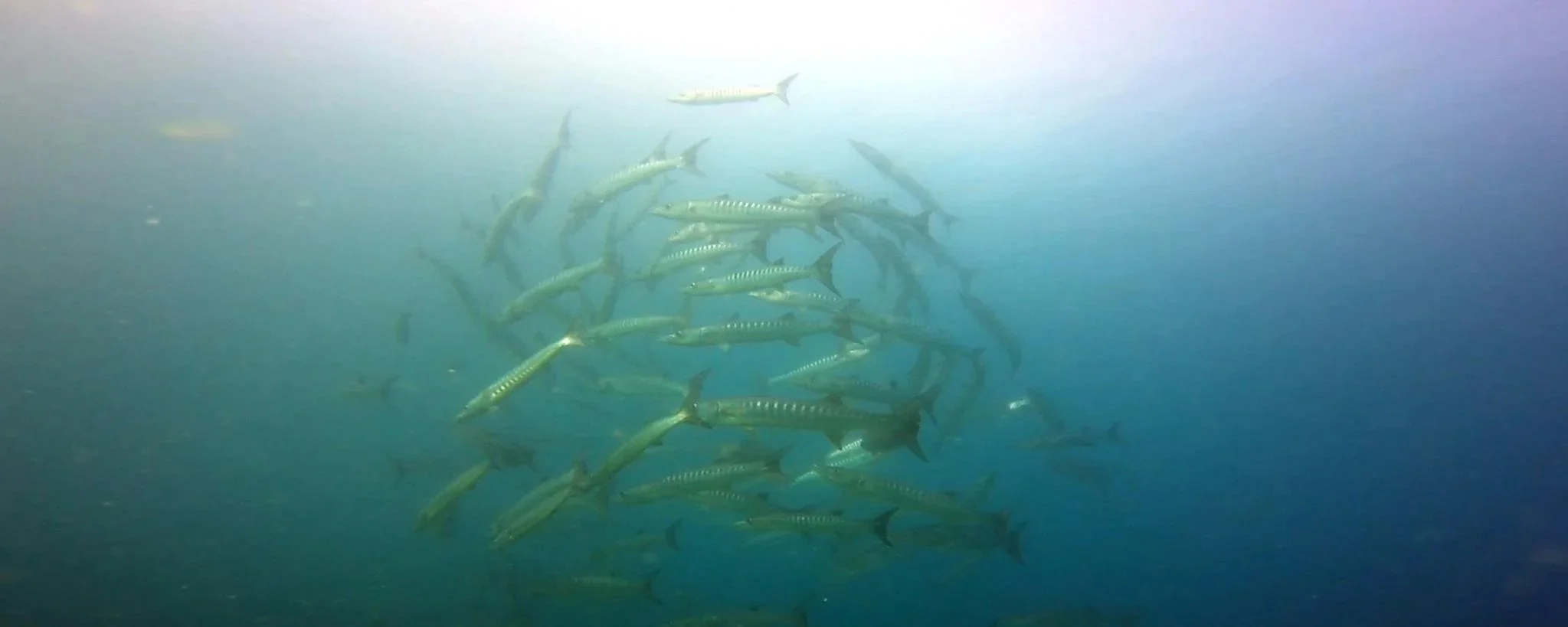
Where can you see schooling fish in Komodo?
Schooling fish are seen across many dive sites in Komodo National Park, especially at current-rich locations like Castle Rock, Crystal Rock, and The Cauldron, where nutrient flow attracts massive concentrations of marine life.
🌊 Why Do Fish School in Komodo?
❓ Why are there so many fish in Komodo?
The answer is simple:
👉 Currents + food
Strong tidal movement creates:
Plankton-rich water
Dense baitfish populations
Continuous food chains
This leads to huge schools of:
Fusiliers
Trevally
Surgeonfish
Snapper
👉 These same conditions also attract predators — including sharks, as explained in Where to See Sharks in Komodo (Best Dive Sites & Conditions).
👉 And larger species like manta rays feeding nearby — covered in Manta Rays in Komodo: Best Dive Sites, Conditions & What to Expect.
📍 Best Dive Sites for Schooling Fish in Komodo
❓ Where are the biggest fish schools in Komodo?
🐟 Castle Rock
Castle Rock is one of the most iconic dive sites in Komodo.
Here you’ll experience:
Dense, fast-moving schools
Predatory action around the reef
Constant movement in the water column
👉 These schools form because of reef structure and current flow — also key to coral health, as explained in Why Komodo’s Coral Reefs Are So Healthy (And What Divers See).
🐟 Crystal Rock
Crystal Rock offers:
Multi-layered fish schools
Changing formations depending on current
Excellent visibility of movement
Fish here often:
Shift direction rapidly
Form tight defensive patterns
React to predator presence
👉 These behaviours are closely linked to Komodo diving conditions and current flow patterns.
🐟 The Cauldron
The Cauldron is one of the most dynamic sites in Komodo.
Expect:
High-speed fish movement
Funnel-like current effects
Predator-prey interaction
👉 These environments require good dive positioning — explained in How Liveaboard Dive Planning Improves Safety in Komodo.
🧭 When Are Fish Schools Most Active?
❓ Do fish schools change throughout the day?
Yes — fish activity changes based on:
Tide movement
Current strength
Light conditions
Peak activity often happens:
During moving tides
When currents are strongest
👉 Understanding these patterns helps predict the best dive times — explained in Best Time to Dive Komodo (Seasons, Conditions & Marine Life).
👨✈️ Real Experience: What It Feels Like Inside a Fish School
From real dives:
“At times, visibility disappears into movement — thousands of fish surrounding you, shifting direction as one.”
“When predators move through, the entire school reacts instantly, creating waves of motion across the reef.”
👉 This is one of the most immersive experiences in Komodo liveaboard diving.
📊 Why Schooling Fish Matter to the Ecosystem
❓ Why are fish schools important?
Fish schools are not just visual — they are essential to reef health.
They:
Transfer energy through the food chain
Support predator populations
Maintain ecosystem balance
👉 This is why Komodo’s ecosystem remains so active and healthy.
⚠️ How to Dive Safely Around Large Fish Schools
❓ Is it safe to dive in large schools of fish?
Yes — but awareness is important.
Key tips:
Stay close to your guide
Maintain buoyancy
Avoid sudden movements
👉 These principles apply across all Komodo diving environments — especially in current-driven sites.
🌊 Why Liveaboards Deliver the Best Fish School Encounters
A Komodo liveaboard diving trip offers the best chance to experience schooling fish at their peak.
Liveaboards allow:
Diving at optimal current times
Access to multiple high-energy sites
Flexible daily planning
👉 This is why many divers choose liveaboards — explained in Top 10 Reasons to Choose a Komodo Liveaboard.
👉 It also connects directly to how dive days are structured — see Komodo Liveaboard Daily Life.
❓ Komodo Schooling Fish FAQs
What fish form schools in Komodo?
Fusiliers, trevally, snapper, and surgeonfish are the most common schooling species.
Are schooling fish always present?
Large schools depend on currents and conditions, but smaller groups are almost always visible.
Where are the biggest fish schools?
Castle Rock and Crystal Rock are among the most consistent sites.
Do fish schools attract sharks?
Yes — predators often follow schooling fish, creating dynamic dive experiences.
🔥 Final Thoughts: The Ocean in Motion
Schooling fish in Komodo are not just something you see.
They are something you experience.
They turn the reef into:
A moving system
A living structure
A constantly changing environment
Understanding this transforms your dive from:
👉 observing marine life
to
👉 being part of the ecosystem
👉 Plan Your Komodo Liveaboard Diving Trip (2026–2027-2028)
If you want:
High-energy reef dives
Massive schools of fish
A small group, personalised experience
👉 Komodo liveaboard trips run June–September and fill quickly — secure your space early.