Quick Answer: Is diving in Komodo safe?
yes, when dives are properly planned
experienced guides manage current timing
site selection adapts daily to conditions
small groups improve control underwater
briefing and positioning are key to safety
Komodo is not “dangerous diving” — it is dynamic diving that rewards preparation.
🌏 Introduction: Why This Question Matters
Many divers researching Komodo National Park ask the same question:
👉 Is diving there safe?
The short answer is yes.
But Komodo is not a passive reef destination.
It is a living marine environment shaped by tides, geography and nutrient-rich currents.
Understanding how conditions work — and how professional liveaboard teams manage them — is what makes the difference between uncertainty and confidence.
🌊 What Makes Komodo Diving Feel More Intense?
Komodo sits between the Indian Ocean and the Flores Sea, creating powerful water movement through narrow island channels.
This results in:
strong but predictable tidal currents
high fish density
thriving coral ecosystems
dynamic drift diving experiences
To new divers, this movement can feel dramatic.
To experienced guides, it is simply part of daily dive planning.
🤿 How Dive Planning Reduces Risk
Safe diving in Komodo is based on timing and positioning.
Professional liveaboard teams monitor:
tide tables
wind direction
swell patterns
diver comfort levels
group air consumption rates
Instead of diving “against nature,” experienced crews work with the ocean’s rhythm.
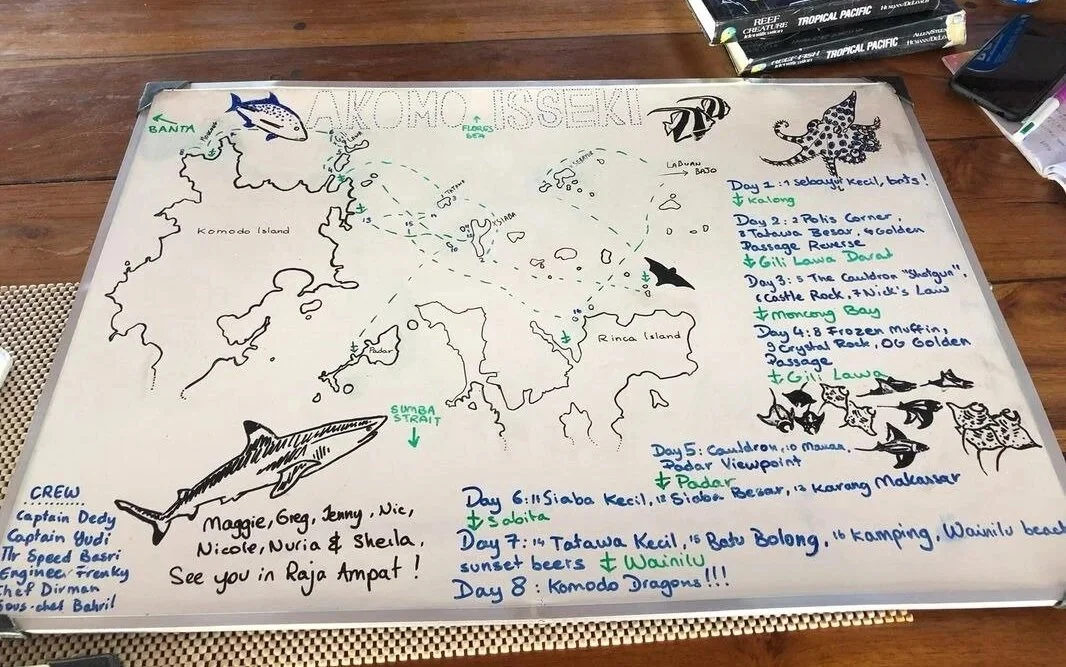
This approach allows guests to experience famous sites like Batu Bolong or Tatawa Besar in controlled, enjoyable conditions.
⚓ Why Small Dive Groups Improve Safety
One of the biggest safety advantages in Komodo is small group diving.
On small liveaboards like Kira Kira and Akomo Isseki, groups are limited to just a few divers per guide.
This allows:
closer supervision
faster response to current changes
easier underwater communication
more relaxed drift control
Large dive groups often struggle in moving water.
Small expedition-style diving creates confidence.
🌡 Understanding Real Conditions in Komodo
Sea conditions vary across the park.
Divers may experience:
water temperatures from the mid-20s°C range
visibility changes linked to plankton cycles
gentle drift dives one day and faster current rides the next
These variations are what make Komodo’s marine life so spectacular — and why flexible planning is essential.
🐟 Why Dynamic Conditions Create Better Diving
Komodo’s moving water supports:
massive schooling fish
manta ray feeding zones
reef shark hunting corridors
vibrant coral growth
In many ways, the same conditions that make divers cautious at first are exactly what create the world-class underwater encounters the region is famous for.
✔ Why Trust This Guide
based on real liveaboard operations
written from practical expedition planning experience
updated according to seasonal diving patterns
used by international guests preparing for Komodo trips
Liquid Adventures Indonesia specialises in small-group liveaboard diving, allowing dive teams to adapt routes and dive profiles to real-time conditions.
🌅 Confidence Comes from Preparation
Divers who understand Komodo before arrival often enjoy the experience more.
By recognising that currents are:
👉 predictable
👉 manageable
👉 part of the ecosystem
Guests quickly shift from concern to excitement.
For many, their first drift dive in Komodo becomes one of their most memorable underwater moments.
📅 Planning Your Komodo Liveaboard Adventure
Trips typically run:
7-night expeditions
multiple dives per day
flexible itineraries based on sea conditions
Bookings for 2026 and 2027 departures are now open, with small group spaces filling early for peak season months.