What Happens Underwater When the Water Starts Moving
🌏 Introduction: Why Komodo Feels Alive Underwater
Divers don’t talk about Komodo quietly.
They talk about it like a force of nature.
The reason is simple: currents.
In Komodo National Park, water doesn’t sit still. It moves with purpose — pulling nutrients, fish, predators, and life through narrow channels between islands.
Currents are not a side feature of Komodo.
They are the engine that powers everything you see underwater.
🌊 Why Komodo Has Strong Currents
Komodo sits between two major bodies of water:
The Indian Ocean
The Flores Sea
Tidal exchange between them funnels through tight island passages. When water is squeezed through narrow gaps, it accelerates — just like wind through a canyon.
This creates:
Nutrient upwellings
Plankton blooms
Massive fish populations
Predator-rich ecosystems
Currents are not dangerous chaos.
They are structured energy.
And marine life follows that energy.
🐟 What Currents Mean for Marine Life
Where currents flow, life gathers.
Divers often see:
Schooling trevally hunting
Reef sharks cruising edges
Manta rays riding cleaning stations
Clouds of fusiliers moving like storms
Coral polyps fully extended in nutrient flow
Fish position themselves inside currents to feed. Predators patrol the edges. Reefs glow with suspended plankton.
Without currents, Komodo would be beautiful.
With currents, it becomes extraordinary.
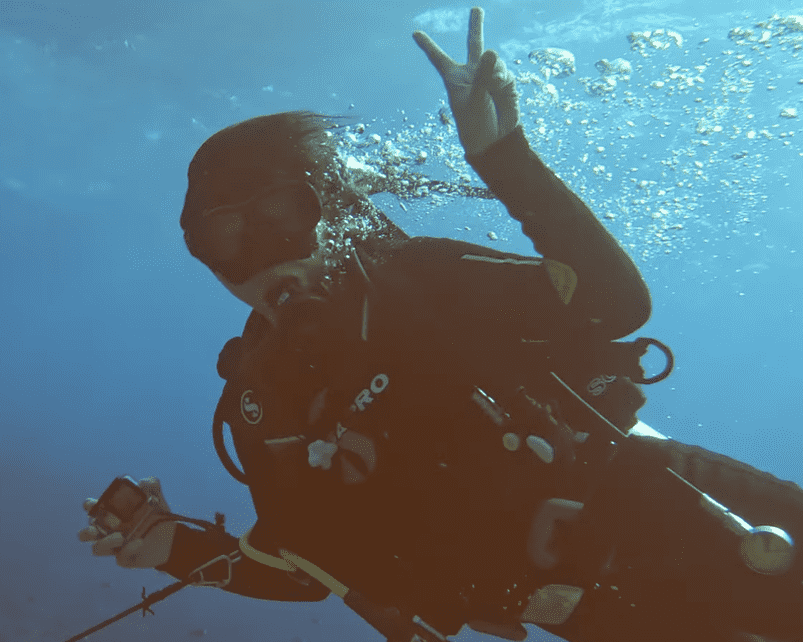
🧭 Drift Diving in Komodo: How It Works
Drift diving is not about fighting water.
It’s about working with it.
A typical Komodo drift dive involves:
Entering at the start of the current
Allowing water to carry you along the reef
Using coral heads and rock formations as shelter
Maintaining neutral buoyancy
Staying close to your guide
Movement becomes effortless. The reef comes to you.
This style of diving allows access to areas impossible to explore by swimming alone.
⚖️ Are Komodo Currents Safe?
Yes — when managed correctly.
Professional dive operations choose sites based on:
Tidal timing
Direction of flow
Diver experience level
Surface conditions
Strong currents are not constant.
They are predictable.
Experienced guides read water movement like weather. They adapt sites and entry points to keep dives exciting but controlled.
Guests are never pushed beyond comfort levels.
Currents of Komodo
🧠 How Currents Change the Dive Experience
Currents add:
Adrenaline
Focus
Awareness
Flow
Divers often describe Komodo as feeling more alive than anywhere else.
You are not hovering over a reef.
You are part of a moving ecosystem.
Every second reveals new fish, new formations, new interactions.
It’s dynamic diving — not static sightseeing.
🌱 Why Currents Create Biodiversity
Currents pull deep, nutrient-rich water upward.
This feeds:
Plankton
Coral
Small fish
Larger predators
The entire food chain thrives.
Komodo is one of the rare places where geology, oceanography, and biology align perfectly.
Currents are the invisible architect of that balance.
⚓ Why Liveaboards Experience Currents Best
Liveaboards can:
Time dives with tidal windows
Reach remote current-driven sites
Avoid crowded schedules
Adapt routes daily
Day boats follow fixed timelines.
Liveaboards follow the ocean.
That flexibility dramatically improves current diving experiences.
🌊 Currents Are Komodo’s Signature
Some destinations are calm and quiet.
Komodo is energetic and alive.
Its currents are not obstacles — they are the reason Komodo ranks among the world’s greatest dive destinations.
Understanding them turns fear into fascination.
And fascination into unforgettable dives.