Introduction: Drift Diving Is the Language of Komodo
Drift diving isn’t a side activity in Komodo National Park — it’s the heartbeat of the ecosystem.
Reefs here evolved with moving water. Fish expect current. Coral thrives in flow. Predators patrol the edges.
For divers, this means some of the most dynamic underwater experiences on Earth — when guided correctly and timed with the tides.
This guide highlights the Komodo sites where drift diving is not just possible… it’s spectacular.
🐉 Batu Bolong — The Iconic Current Reef
A submerged pinnacle rising from depth into moving water, known for:
Dense schooling fish
Reef sharks along the edges
Trevally hunting in formation
Coral walls packed with life
Drift diving here is about positioning. Guides keep the group on the protected reef face while current flows just meters away.
🦈 Castle Rock — Big Fish in Motion
A classic current corridor site, famous for:
Sharks riding the blue
Giant trevally schools
Barracuda formations
Pelagic fly-bys
Often a “hook-in then drift” style dive depending on conditions.
🐟 Crystal Rock — Colour in the Current
A reef-focused drift with strong fish density:
Anthias clouds in the shallows
Fusilier rivers flowing past the reef
Reef sharks and napoleon wrasse
Beautiful coral structure with natural shelters
A perfect example of Komodo “fly-over reef city” diving.
🐠 Shotgun — The Famous Channel Ride
A Komodo classic drift through a narrow channel where water accelerates.
Divers enter on the calm edge, then ride the current through a short, thrilling section before exiting into shallower reef.
It’s fast, controlled, and unforgettable.
🐢 Tatawa Besar — Gentle but Powerful Drift
Not all Komodo drifts are extreme. Tatawa Besar offers long, flowing dives with:
Soft coral slopes
Turtles cruising the reef
Big schools in steady current
Often excellent visibility
A great confidence-builder for divers learning to love moving water.
🐋 Karang Makassar (Manta Point) — The Manta Drift Site
This is the main drift site for mantas in Komodo.
Karang Makassar is a long, shallow ridge where current runs across the reef and creates a natural feeding and cleaning zone for manta rays.
What divers love here:
Manta rays gliding in formation
Gentle drift over a sandy-coral ridge
Wide-angle visibility and “big blue” moments
The feeling of being carried through a manta highway
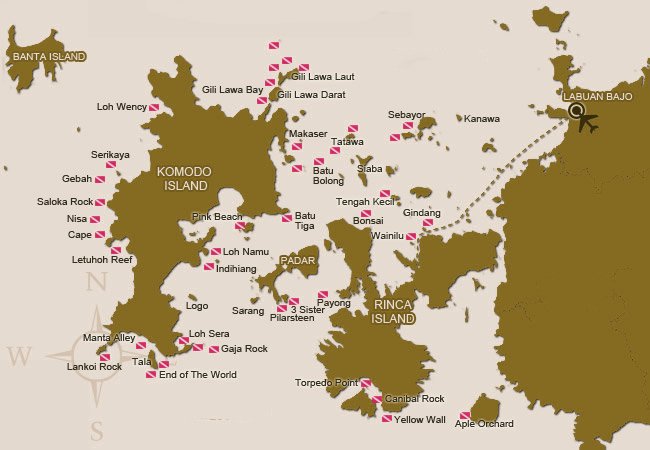
Dive Site Map of Komodo
The diving style is often a slow drift, with guides positioning the group so mantas approach naturally without crowding them.
If a guest searches “Komodo manta drift dive,” this is the site they mean.
🌊 Why These Sites Work So Well
Komodo’s geography creates natural current highways.
When tides push water through island gaps:
Nutrients surge
Fish concentrate
Predators gather
Coral feeds
These dive sites sit exactly where that energy peaks.
They’re biological intersections — not random reefs.
⚓ Why Liveaboards Access the Best Drift Conditions
Liveaboards can:
Time dives to tidal windows
Reach current corridors at the right moment
Avoid crowded schedules
Adapt daily to conditions
Currents are predictable. Liveaboards follow the prediction.
🌱 Drift Diving Is Komodo’s Identity
These reefs weren’t shaped for static hovering.
They were shaped for movement.
Learning to drift dive in Komodo isn’t about conquering currents — it’s about understanding the ecosystem that depends on them.
Once you move with the water, the reef opens up.
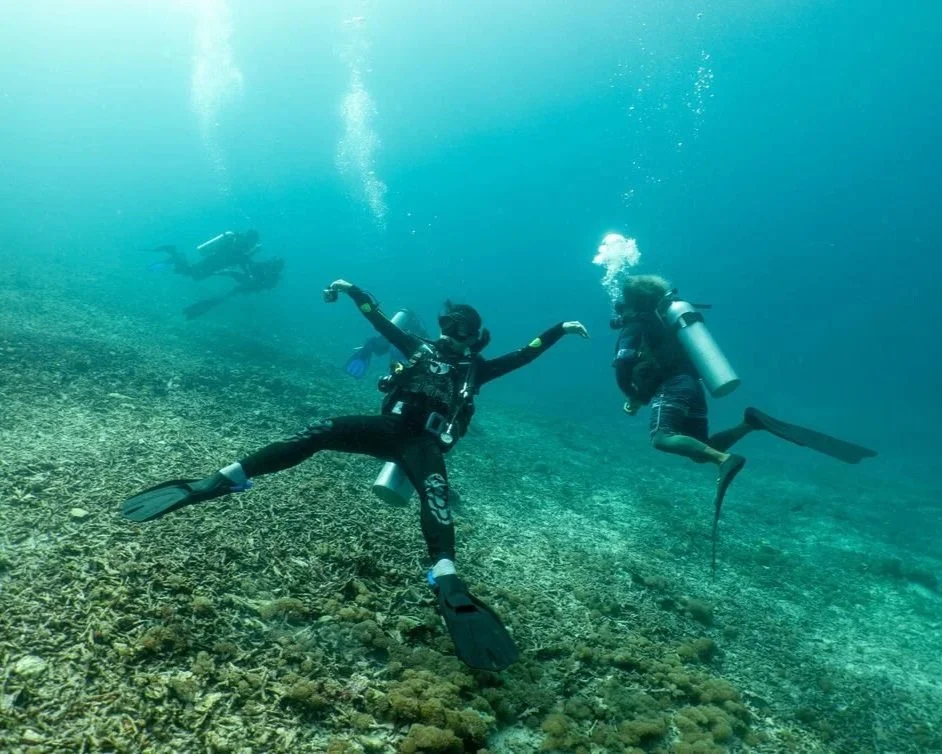
2 of our favourite guests loving life in the currents of Komodo Park
Explore our 8-day Komodo liveaboard itinerary for the route, current prices and inclusions. Dive-site selection depends on conditions and the cruise team’s assessment.